
Social Nucleus

Categories
Uncategorized

4 Accounts to Get Marketing Inspiration

4 Accounts to Get Marketing Inspiration

When the inspiration runs dry, where better to turn to than other marketing personalities. There are so many great accounts out there that churn out amazing content to get the cogs flowing, so for today’s post, we thought we would share with you our favourite accounts to turn to when you need a bit of content or marketing inspo!

Social Savannah

Social Savannah is one of our favourite accounts to delve into when we’re feeling dry on the inspiration front. With over 5 years in the industry, Savannah is an expert in paid social strategies for eCommerce brands. On her Instagram and Twitter platforms, she shares paid social updates, strategy tips, content inspiration and SO much more!

You can find her here – www.thesocialsavannah.com 

Belinda Weaver

When it comes to copywriting, Belinda Weaver is your woman. She is the founder of CopywriteMatters, a copywriting business and community. She shares lots of free copywriting advice through her blog and social channels. She has also created copywriting groups on LinkedIn and Facebook, connecting copywriters all across the globe. If you’re looking to brush up on your copy skills, this is the place to be.

You can find her here – www.copywritematters.com 

AdEspresso

AdEspresso is the advertising focused blog run by Hootsuite. Their blog covers everything you could ever imagine to do with Facebook and Google advertising. It is one of the best resources to keep up to date with Facebook and Google Ads news and tactics to run successful campaigns that convert!

You can find them here – www.adespresso.com/blog 

Ad Alchemist

Another blog that we love over here at Social Nucleus is Ads Alchemist. A blog ran by an anonymous individual who has over 7 years’ experience in Facebook ads. They have launched their own blog giving readers a continuous stream of free, actionable Facebook ads content. Their Twitter page is particularly useful in sharing top tips so if you’re an active user over there we recommend you drop them a follow!

You can find them here –  www.adalchemist.com 

So, there you have it. If you ever need some marketing inspo to kickstart your next project, give these accounts a little attention! We’re confident they’ll give you the boost you need to smash your business goals.

Categories
Uncategorized

The Psychology of Colour in Advertising

The Psychology of Colour in Advertising

When it comes to content marketing, colour is key. Colour psychology has been around for years. It is an area of research that examines how colour influences our behaviour as consumers. Different colours can impact the way buyers perceive a brand in ways that aren’t always apparent.  It is an emotional cue that can help your audience feel what you want them to feel simply by using different colours and is why understanding colour psychology is so important for the success of your content.

Using the wrong colour choice can negatively impact your advertising and send out the completely wrong message. Today, we’re going to go over the main colours, what they mean for your advertising, and where to use them.

Red

Red is a very powerful and dynamic colour. It triggers powerful emotions, both positive and negative. It often represents our physical needs, whether that’s affection, love, fear or terror. Red is also a very energising colour that can portray friendliness and strength, but depending on its context, can be very demanding and show aggression.

If you’re looking to portray a really powerful presence or to grab audience’s attention fast, red is the colour for you. That’s why you will often see sale signs in red as it creates a sense of urgency. Just a warning, be careful using red, as it does carry some negative connotations. Use it sparingly.  

Orange

Orange is a very warm colour and has similar connotations. This mix of yellow and red represents physical comfort. Orange is often associated with motivation, a positive outlook and general enthusiasm. 

It’s a fun and bright colour, so often suited to a non-corporate brand. Orange is also thought to induce feelings of hunger, meaning it could be a perfect choice for a food brand!

Interestingly, orange has been associated with cheapness, so be careful using orange if you’re going for a luxury vibe.

Brand Example: Burger King 

During their iconic rebrand, Burger King have gone for an eye-catching pop of orange in their new logo which works perfectly given their key intention is to make customers hungry. They also don’t need to worry about about ‘cheapening’ their brand as they sell themselves as affordable, attainable fast food. 

Burger King - Wikipedia

Yellow

Everyone loves yellow. Yellow is the epitome of joy, happiness, cheerfulness and optimism. Anything yellow almost always represents something happy and joyful. It’s been proven that infants first respond to yellow above any colour, proving that yellow is the easiest colour to visually see. 

You should use yellow to lift people’s spirits and confidence but should be used carefully as yellow often has connotations with anxiety, caution and fear. If you know your brand is strongly associated with confidence and happiness, use it. If there’s any room for doubt, avoid it. Find the right balance to motivate your audience instead of bringing them down.

Brand Example: McDonalds

McDonalds’ iconic ‘M’ in their logo is a great example of colour psychology. They want their restaurants to be the epitome of happiness, fun and good food. The yellow colour of their logo helps customers associate these feelings with their restaurant.

McDonald's - Wikipedia

Green

Green is a lovely colour of balance and harmony. It’s a visually appealing colour, easy on the eye, which gives us a clear sense of right from wrong (due to the fact that it incorporates a balance of both the logical and emotional). Green is the colour that represents natural life, rest and peace. It’s also a sign of growth, whether that be physical or financial. 

Green is a very common colour used across health and organic brands, as well as pharmaceuticals.  

If you’re looking to portray health, rest, growth, or finance, green is the colour for you. Green does have some negative associations with possession and materialism; however, the positive connotations outweigh the bad in this case.

Blue

Blue is famous for its reflection of trust and dependability. It has a very calming effect on the mind and is often referred to as the colour of reason. 

Unlike the colour red, blue tends to create a mental reaction, as opposed to a physical one, that allows us to destress and calm down. It’s the colour of mental strength and wisdom.

Of course, blue does have some connotations of sadness, coldness and can often make you appear quite distant if used in great amounts. Use this colour with caution and only if it fits your brand. 

Purple

Purple is a colour associated with the imagination, spirituality and royalty. It possesses all the energy and power of red, alongside the stability and trustworthiness of blue, making it the perfect balance between the physical and spiritual. 

If you’re a luxury brand, this is the colour for you. It is often seen as quite a moody colour, and different tints of purple can be used to represent femininity.

Purple is a very intriguing colour, but also leaves space for mystery and new ideas. Creativity is often associated with this colour. However, you should avoid using this too much as it can leave a bit too much room for introspection and distraction. 

Brand Example: Cadburys 

Cadburys is actually a really interesting example as their iconic purple packaging doesn’t necessarily relate to any of the typical emotions related to this colour. They’re an affordable, every day brand using colours often associated with royalty and wealth. This is a perfect example of how iconic brands can redefine the psychology behind colours and often do. 

Bulletproof redesigns Cadbury and Dairy Milk to “put the humanity back into  it”

Pink

Pink often represents compassion and unconditional love. It’s often seen as a very physical and soothing colour, associated with hope and romanticism. It is also the most widely used colour to portray femininity. 

If used too much, pink can be very draining, display a lack of power and even come across immature. Pink is great to use instead of red when appropriate.

Black

Sophistication, seriousness, control and independence are all associated with the colour black. It is a very reserved colour, that lacks any light. It is synonymous with luxury and power and is often well suited to fashion industries.

Black can also be used to shoe evil, mystery and even death, so as you can imagine, using too much of it can create an aura of sadness and negativity. So, use it sparingly. Maybe use it more in your text than visuals themselves.

Gold

Gold is thought to be a rich colour that represents royalty, wealth and money. It has connotations of charm, confidence and friendliness, so is best used for brands that are friendly and conversational. It is more often than not a positive and inspiring colour. 

However, when used too much in one space, gold can feel egotistical, self-righteous and too proud. Try to use this colour sparingly to highlight, rather than be the main centre-piece. 

Silver

Silver is commonly associated with ‘second place’ or second best. It is still seen as a somewhat wealthy and regal metallic but less so than gold. 

It is also a colour synonymous with cleanliness and has become the go-to for modern brands. However, if poorly executed, it can look lazy and lack personality. 

Silver is thought to trigger the emotions of hope and sensitivity. It is believed to be the mirror to the soul. It is this association that also makes silver feel clean and trustworthy. 

Silver feels sturdy and reliable meaning it is often a positive colour in the marketing world.

Now, you should be a colour psychology expert. Next time you are creating your visuals or thinking of your next big campaign, refer back to this article. You cannot know how your audience will respond to your colour choices without creating thoughtful A/B tests to determine which colours generate the most sales.

Still need some help with your content? We have an amazing in-house team of graphic designers who can help you determine the best colours to use for your marketing campaigns.

Categories
Uncategorized

How to Create Seasonal Marketing Campaigns with a Difference

How to Create Seasonal Marketing Campaigns with a Difference

Keeping your brand fresh and up to date can sometimes seem difficult. Running seasonal marketing campaigns can seem repetitive, boring and very unoriginal. Even if you aren’t a seasonal business, it’s important you adapt your marketing strategy to keep up with the holidays. 

It’s also important you stand out from the crows when it comes to seasonal campaigns, such as Christmas, Mother’s Day, New Year, etc. Today’s post is going to walk you through our top tips to creating a seasonal marketing campaign with a difference, to ensure you stand out from the rest this holiday!

Make it centred around your unique products

If your brand has a unique product that is specifically focused on a holiday, showcase it. Make your campaign centred around this product. Display its unique selling points, explain and push why your customers need this product. It’s also super important you pick the right seasonal opportunity, and this will largely depend on the product you plan to focus on. Do your research, collect data on when customers are most likely to engage with a product like yours and make the right choice. 

Avoid the common one-liners and phrases of the season

I mean, this one goes without saying. Customers are sick of hearing overused one-liners such as “place our product under your tree this Christmas”. BORING. We’ve all heard it before. As a copywriting marketer, you should ALWAYS be thinking of new, catchy lines to use in your marketing campaigns, and to really make a difference, you want something unique to your brand and your product.

Give the campaign a deeper story or meaning – not just about the holiday

The most effective seasonal campaigns tell a story. They don’t just focus on the holiday itself. It tells a story, engages their viewers, draws them in, makes them relate… you get the gist. To really make a difference and stand out, give your campaign a deeper meaning. Map the customer journey and tell the story you want to tell. 

Enlist a charity or partner brand

Over the years, we’ve seen many successful brands partner with charities for their seasonal campaigns, particularly Christmas ones. Enlisting or working with a charity can set your brand apart. By showing that you care about more than just making a sale, will ironically, surely increase your sales. Customers will see you as more than just a company. They will connect, relate and engage with your story and will feel encouraged to purchase. 

Provide an incentive or deal to the customer that’s better or different from the rest

We see seasonal campaigns all the time offering incentives – but in order to make a difference, you need to make your offer unique. Giving a percentage discount on products is extremely overused. To make a difference, you need to do something outside the box, such as, free gifts, competitions, free subscriptions for a year. There are multiple areas you can look at here, but you have to make sure it’s a better and different incentive to your competitors. 

Feeling excited about seasonal marketing again? So are we! We hope this post has provided you with some inspiration to smash your next seasonal campaign but if not, we’re always here to help.

Book a free strategy call with one of our team to find out how we can help your business today!

Categories
Uncategorized

Why Every eCommerce Business Should Choose Shopify

Why Every eCommerce Business Should Choose Shopify

Calling all new business owners… or business owners in general: if you’re not on Shopify, here’s exactly why you should be. 

When it comes to building your eCommerce business, there are so many options available to you. It can be overwhelming and often tempting to choose the first thing you see. However, we tell every client that comes onboard to move their website to Shopify if they haven’t already, so we thought we do a breakdown of all the reasons why Shopify is the best option. 

Big brands use Shopify

A lot of big-name brand use Shopify, which really builds the picture of why it is a go-to choice for ANY brand. Brands such as Tesla, Nestle and Kylie Cosmetics are all Shopify users and are all extremely successful. If that isn’t enough to persuade you, let us give you more options. 

Customer experience

Your customer’s experience should always be at the forefront of your mind. You want users to be able to navigate your website easily and find what they’re looking for. With Shopify, customising your website layout is super easy and anyone can do it. It will look flawless and most importantly, it will run smoothly.

There’s nothing worse than a slow website that’s hard to navigate and you can eliminate this worry with Shopify’s easy customisation tools to guarantee a positive customer experience. 

Variety of apps to enhance the site

There are a variety of apps you can access when using Shopify to enhance your site and improve customer experience even further. Some of our favourites are:

  • Loox Reviews: Loox is a fully-featured product review app that enables online businesses to automatically collect customer reviews with photos and beautifully display happy customer content. Using this app you can boost your trust, drive word of mouth and referrals, and increase customer retention and sales.
  • Candy Rack: If you’re not familiar with the concept of upselling, this is essentially how you take the purchase of one item worth £50 and turn it into a sale of three items worth £100, simply by recommending additional, associated products to the customer.

This could sound like quite a manual task but by adding the Candy Rack app to your Shopify site, you can set it up in just 16 seconds (according to them anyway). Candy Rack automates branded design pop-ups on your site that appear when specific items are purchased, recommending related add-ons to the customer, often at a discounted rate. 

  • Privy: There’s a reason more than 18,000 Shopify merchants have given Privy a 5-star rating. This app helps eCommerce owners sell more in many ways. Firstly through converting more visitors. Privy allows you to grow your email lists with pop-ups and on-site announcements that grab visitors attention before they leave your site. 

Affordable, discounts offered on annual plans

Another advantage of using Shopify is the affordability. It is competitively priced compared to other website hosts and a great option if you’re on a budget.

If paying monthly isn’t for you, Shopify also provide discounts on annual plans and biennial plans. If you opt for an annual subscription, you will receive a 10% discount. If biennial is more up your street, you can enjoy a very generous 20% discount.

User support

Shopify have a huge user support and assistance programme in place. Agents are knowledgeable, friendly and are available 24/7. They are trained to handle any issues from uploading fonts to setting up shipping options. Using Shopify gives you the confidence to run your website confidently, knowing that any issues can be handled at the click of a button.

There are our top 5 reasons why YOU should be using Shopify above any other website host. If you need help building your website via Shopify, get in touch with our expert team to find out how we can help your business!

Categories
Uncategorized

Jargon in Writing – Should You Use Jargon in Your Copy?

Jargon in Writing – Should You Use Jargon in Your Copy?

Wondering whether or not to use industry-specific jargon in your copy? Where is and isn’t it acceptable to use jargon in advertising copy? Find out the ins and outs of using jargon right in today’s blog. 

When it comes to copywriting, one of the first rules we’re taught it to get rid of complicated language, aka jargon. People respond to simple words. Don’t overcomplicate things. That’s what we’re always told right? 

When you look at using jargon objectively, is it really all that bad? Well, for the majority of the time, using jargon can be detrimental to your copy. However, in some exceptions, it can be acceptable to use it and it may even maximise your sales. Let us explain.

What is jargon?

Jargon is defined as “special words or expressions used by a profession or group that are difficult for others to understand”. Naturally, you would assume NOT to use jargon as a copywriter, as making your copy hard to understand defeats the whole purpose of writing copy. 

However, jargon CAN be used to create a sense of enhanced value. You can make the ordinary seem extraordinary by playing with words. We’re not saying over complicate your copy for the sake of it. But if you’re writing about a technical topic, there are lots of industries that have their own language. Being aware of your target audience is super important here so knowing your terminology and using it correctly is an effective way of using jargon in your copy.

When to not use jargon in copy

So when do we not use jargon? There’s a fine line when it comes to using jargon. Steven King even called it the copywriting equivalent of the dandelion. One is fine, but if you’re not careful, you can get covered in their little flowers. You then won’t be able to see your lawn or tell the difference between grass and flower stalks. See the analogy we’re going for here? 

It goes without saying that if you’re writing for a broad, open audience that doesn’t have specialist knowledge, using too much jargon immediately renders your copy unreadable. You won’t be able to relate to them and persuade them to purchase. However, if you know your audience does have this specialist knowledge, go for it. Don’t overdo it, but you can definitely afford to sprinkle a bit in here and there, simply to create a sense of enhanced value. You can use it to build trust and make your copy more compelling.

For example, let’s take coffee:

Avid coffee drinkers will know what a latte is and if you’re a fan of Starbucks, you’ll know that grande means large. To give your customers a sense of enhanced value, change a ‘large coffee’ to a ‘grande latte’. Sounds a lot better right? Your customers understand this jargon which makes them feel important and therefore, more likely to convert.

So, in conclusion, when in doubt, ditch the jargon. As a strong copywriter, you should always try and establish your audiences beforehand. This will allow you to form a supported decision about whether or not you should be using jargon. If you know your audience will understand it, use it …but still, use it sparingly. 

Categories
Uncategorized

Our Top Valentine’s Day Marketing Campaigns

Our Top Valentine’s Day Marketing Campaigns

Wondering what it takes to create the ultimate Valentine’s Day marketing campaign? Here’s some inspiration from 5 of our all time favourites. 

Valentine’s Day – the day of love and romance, but for us marketers, an opportunity to create a smashing campaign with a compelling message. Today, we’re going to share with you some of our favourite valentine’s day campaigns from all over the world.

1. KFC and Deliveroo (Singapore)

Last year, KFC and Deliveroo coupled up (get it?) for their Valentine’s Day campaigns. “Will Deliveroo be my Valentine?” was their campaign name and allowed couples to pre-order home delivery of the KFC love meal combo, which included a chicken dinner and a limited-edition KFC bucket ring.

It’s the perfect combination and brought together two strong brands. They really played off the fact that their businesses go hand in hand and that by joining forces, they could provide customers with a deal that was too good to resist. 

Deliveroo and KFC couple up for a Valentine's Day KFC bucket ring

Image credit: www.marketing-interactive.com 

2. Coors Light

In 2020, Coors Light beer called for singletons to abandon finding their true love and to instead, adopt a dog! This campaign was particularly powerful as they created a fun and playful campaign whilst also promoting an amazing cause.

They offered $100 towards dog adoption fees to the first 1000 people who qualified. They used this Valentine’s day campaign to boost sales and promote a good cause. Great marketing.

3. Ted Baker 

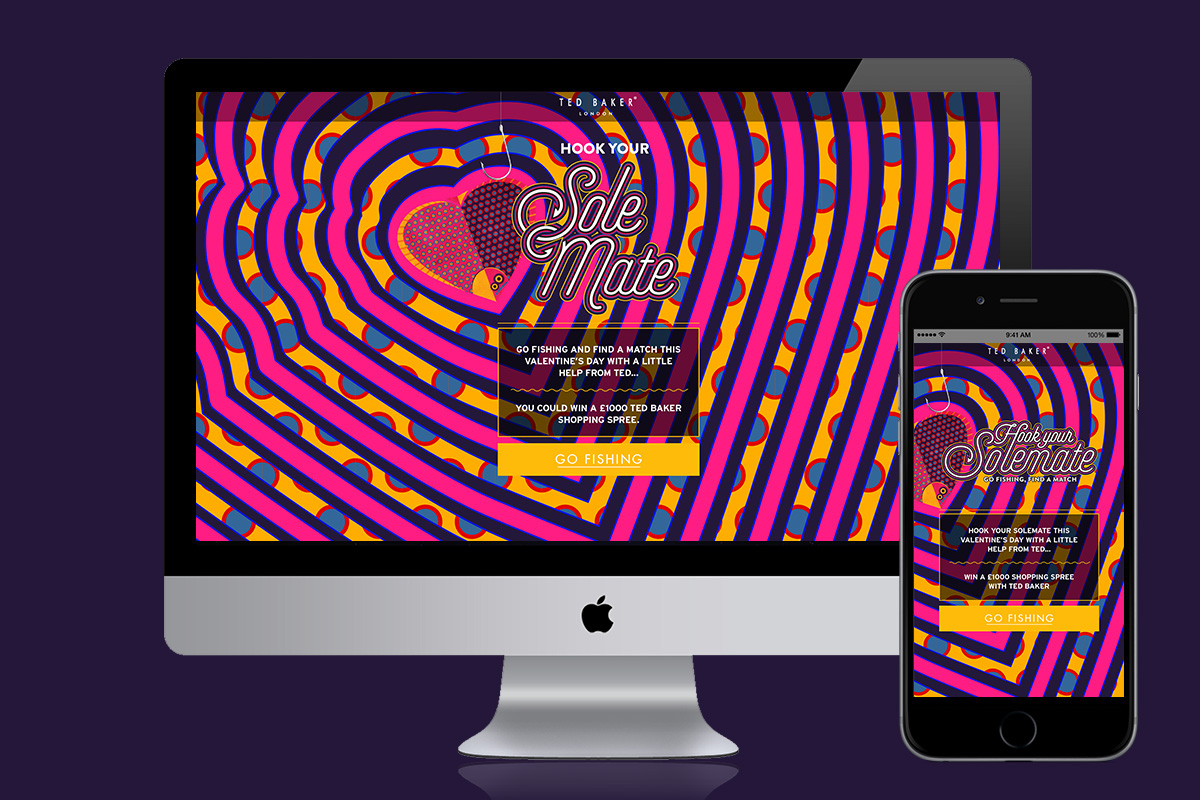
In 2016, Ted Baker hit the nail on the head with their Sole Mates campaign.

Through their clever use of puns and the creation of a playful campaign, Ted Baker invited fans to an interactive game of “hook your solemate” where they could win up to £1000 on a shopping spree.

Their sales rocketed and fans were also encouraged to share the game with friends and family – the perfect bit of shareable content to boost brand awareness. 

Ted Baker - Solemates - Digital Campaign on Behance

Image credit: www.behance.net

4. Virgin Trains

Virgin Trains Valentine’s Love Carriage campaign of 2016 promoted their £42 million re-vamp of trains. Fred Sireix was the face of the campaign, championing both the train service and his belief in true love. The campaign offered singletons a matchmaking train journey from King’s Cross to York, exclusively on the 14th of February. Watch their ad to see just how powerful this campaign was.

5. Hooters

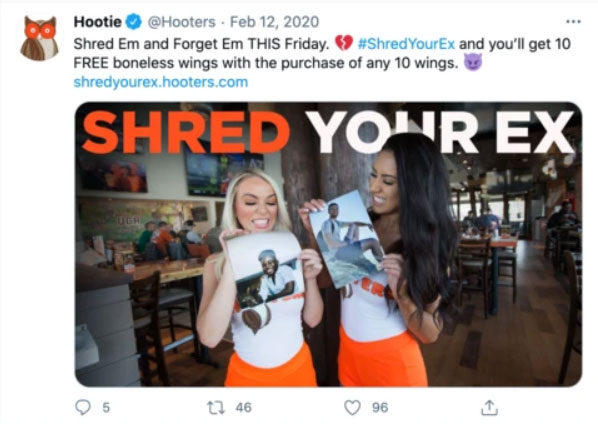
It’s no secret that Valentine’s Day doesn’t go swimmingly for everyone. Hooters played on this with their Twitter Campaign of 2020 with the phrase “Shred em and forget em”. Hooters offered 10 free boneless wings with the purchase of 10 wings when customers shared a photo of an ex to dispose of in the “best possible way” so that the “healing can begin”. They shared this on Twitter and received a great response.

So, what does it take to create a great Valentine’s day campaign? 

✔️ Offer unbeatable deals

✔️ Be relatable

✔️ Work with a charity or a good cause where possible

✔️ Be playful and fun

✔️ Play on people’s emotions and pain points (not everyone has a valentine!)

If you’re the mind behind an EPIC Valentine’s Day campaign this year, share it with us and maybe it’ll be in our top 5 next year!

Categories
Uncategorized

The Secret to Effective Branding

The Secret to Effective Branding

Let’s talk branding. Branding is usually seen as the most important aspect of your business. Slapping together a logo is NOT brand strategy. You need to execute a well thought out strategy to promote your brand, relate to audiences, and more importantly become a memorable figure. So, what do you need to cover before you create a successful brand?

Firstly, what are your brand objectives? What are you setting out to do, achieve, complete?
Secondly, who are your customers? You’ll want to cover demographics such as age, location, gender, etc. And finally, how does your brand define long term success? What is the end goal? Answering these questions will set you up for a great start. Next up is brand building. The definition of brand building is to generate awareness about your business using strategies. You want to create a unique and lasting reputation in the marketplace. Having a strong brand strategy will highlight how your brand is different, trustworthily, memorable, and likeable to the ideal customer. You want to convey your brand purpose and promises. A brand strategy is the most crucial foundation for building a successful brand.

You then need to focus on brand identity, the way you convey your brand to consumers with visuals and messaging. This needs to cover everything from the logo, colours, fonts, website design to the content you use. Creating a memorable and recognisable brand identity is key to success.

You may be asking; how do I build a brand that people love? You need to uncover your ideal customer and really understand who you’re targeting and why. Then ask yourself what differentiates you from the rest? What problems do you solve for the customer? Why should people care about you? These answers will provide a strong foundation, and hopefully give you some inspiration for taglines, slogans, and key messaging. Dig deep and uncover as much as possible at this stage.

Competitor research is also super important here. You should never copy others, but you HAVE to be aware of what they’re doing well, and even what they’re doing not so well. The goal here is to stand out from this competition. Why should customers choose you over them?

In short, here is a list of things to aim for when building a brand

– Consistency
– Creative messaging
– A strong and memorable logo
– A strong social media presence
– Personality and individuality
– Discover your story
– Customer research
– Competitor research
– A strong mission statement

Still need some help creating a strong brand? Book a call with one of our experts to find out how we can help your brand flourish.